
Chef coat, check.
Beanie, on.
Knife sharp.
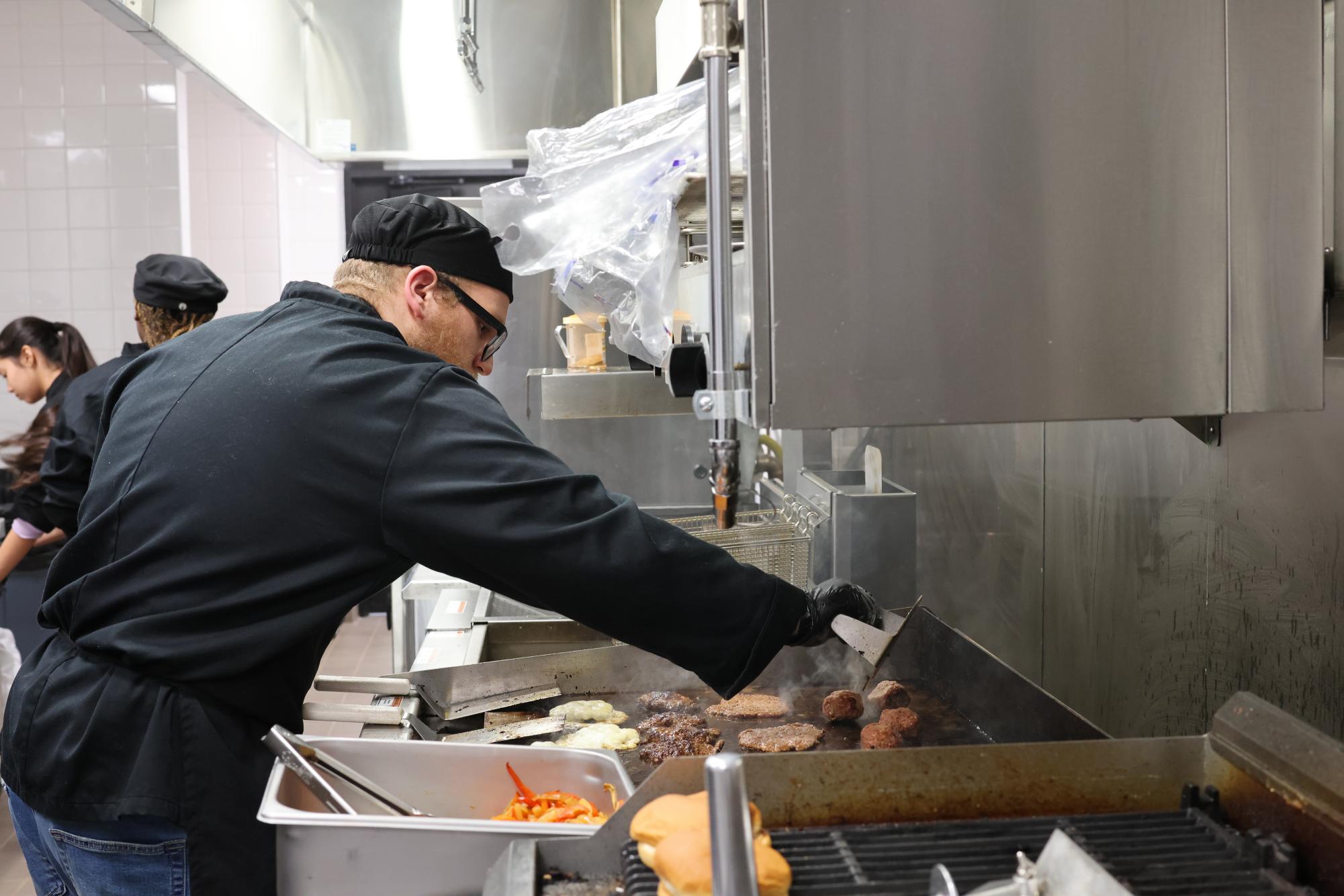
Food at the ready, culinary students prepare their planned meal for the day.
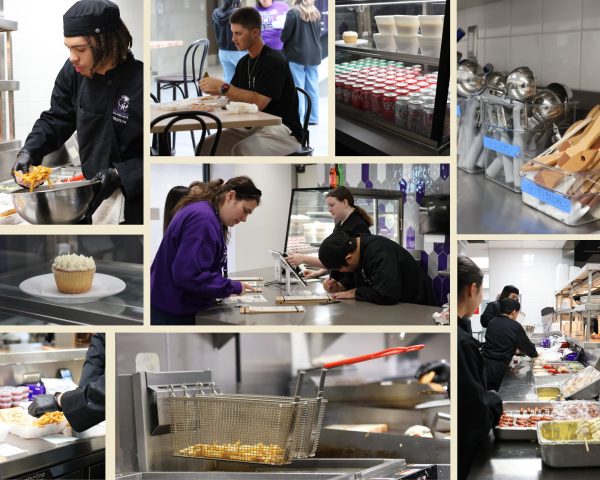
Richland’s Culinary Department has more than 100 students who prep, cook, and sell food to teachers through their student-run cafe known as Fork and Flame as well as cater food to various school events.
“It can be fun or stressful, but attitude and willingness to execute will determine that,” senior and Practicum student Jacob Rogers said. “Some students may think that running the cafe is stressful because we are busy, however a good attitude and a willingness to execute eliminates ‘bad stress’ – the kinda stress that overwhelms you.”
There are four courses in the culinary tract: Intro to Culinary, Culinary Arts, Advanced Culinary Arts, and Practicum in Culinary Arts.
“The most helpful skill for me was how to hold a knife properly because I wasn’t really holding it, (with) like (the) proper technique,” freshman and Intro to Culinary student Elise Gravely said. “But once I learned how to actually hold one, it actually was, like, a whole lot easier to cut into harder vegetables, like carrots and stuff.”
Intro to Culinary students receive a food handlers license which ensures that each student can handle food legally. It is a 3 year certificate. An IBC (industry based certification) is earned by Culinary Arts students – it is a 5 year certification and allows students who hold the license to cook without a culinary teacher being present.
“The class itself is more laid back in comparison to a culinary school, however that does not mean it’s easy,” Rogers said. “I think the class itself shows you the basis of what’s to be expected in a culinary school, or a nice restaurant.”
Veronica Richards and Noelle Corker are the Intro to Culinary teachers. Devin Niederhauser, otherwise known as Chef Dev, teaches the other three classes and supervises the running of Fork and Flame.
“I grew up cooking with my grandmother like my entire life,” Chef Dev said. “One of my oldest memories is making handmade pasta as a toddler.”
The name, Fork and Flame, was picked by Chef Dev and Dr. Croy. The goal was to keep the raider cowboy theme seen throughout the school but give the name a modern feel as well.
“So Fork and Flame is just alliteration,” Chef Dev said. “I feel like having the flame there still kind of keeps it near that whole, like campfire ideology within the theme, but it just keeps it really modern, and with the alliteration, it works really well for design.”
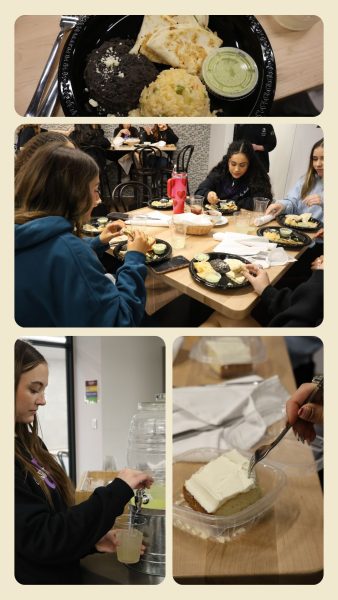
Advanced and practicum students are the main cooks who make orders for Fork and Flame but sometimes Intro’s lesson like cutting vegetables is used to help prepare something for the advanced kids.
“My favorite thing about culinary is that you can show creativity with the food you are preparing,” Gravely said. “You can add your own flair, your own spices, and stuff to make it your own.”
Culinary students have their own locker room to change before and after class. Their uniform consists of a beanie, chef coat, no holy pants, a Sharpie, and closed toed shoes. Students in their second year of culinary receive their own chef coat with their name embroidered on it. It is theirs to keep.
“I’ve been a part of culinary since my freshman year of high school,” Rogers said. “Every year has been enjoyable, but not in the sense that everyday is ‘fun.’ It’s enjoyable because you learn something new about culinary arts everyday.”
Due to contracts with the cafeteria, Fork and Flame is only allowed to sale food to teachers during school hours. They are open 12:31-2:38 on A days on Wednesday or Friday for lunch. They send out a new menu each week for teachers to choose from. So far, they have never had the same menu twice except for having smashburgers again before Spring Break. Examples of food served are German, Italian, and Mediterranean foods.
“It’s top notch,” counselor Lori Heusinger said. “It’s so good. You might as well be going to like a five star restaurant. It’s amazing.”
Fork and Flame is cook to order. Teachers come to the cafe, order at the front counter, and then that order is passed back to the students in the kitchen who begin cooking the food. Once the food is ready, it is passed back to the front and the teacher’s name is called.
“I’m just proud of these kids at Fork and Flame,” Heusinger said. “They’re doing a fantastic job. They’re super professional and we’re lucky to have them.”
The cafe constantly gets asked to provide food for school and community events such as Teacher Appreciation Staff Night, an AP History movie night, and drill team team dinner. Volunteer signups are sent to culinary students asking them if they want to sign up for an event. They can receive volunteer hours for their service.
“I’ve had kids show up at like, 6 a.m. because we have a breakfast to do,” Chef Dev said. “And it’s like, well, you know, I can’t just show up right before service and have everything ready. So I got some really good kids that’ll sign up for a lot.”
There is no requirement to join the Intro to Culinary class – Chef Dev only asks that a student has a good work ethic and a willingness to learn.
“Anybody can go get a job in a restaurant,” Chef Dev said. “Anybody can work their way up, right? So, like anybody can take Intro, anybody can work their way up the ladder to go on to the next year, go on to the next year. You know, that’s all I’m looking for – is people that want to learn and want to work.”
Final course selection is due by May 20th for those who wish to add culinary to their schedule.
“If you enter the program and you’re coachable, you will leave culinary after high school more disciplined, and a better and a safer cook,” Rogers said. “You’ll have a decent understanding of budgeting for yourself, you’ll develop good time management skills, team work of course, and you’ll earn two certifications.”